
Why I Quit Chess and Accidentally Fixed My Doom Scrolling
I am really bad at chess. Like embarrassingly bad. So bad, in fact, that I’ve beaten my 12-year-old son exactly once… when he was five.
Chess is incredibly difficult for me. It’s slow and drawn out, with games being played mentally for twelve steps before a single move is ever made on the board. I find it boring and mentally underwhelming. And yet, despite my general dislike for the game, I decided chess was the answer to curbing my doom scrolling.
The plan was to install a chess app, pay for the upgrade to avoid ads, and then, when I reached for my phone out of habit, I’d play chess instead. All those games would make me a better chess player. I’d beat my kid. I’d actually be able to play against my husband.
It started out well. Every night, instead of scrolling, I logged into the chess app. I watched the daily lesson, played a few puzzles, and then played a couple of games. While I enjoyed the lessons and the puzzles, which were quick, timed challenges where you solved a prompt as fast as possible, I did not enjoy the actual games.
With every loss, I cringed.
How was my rating still so low?
Why wasn’t I making any progress?
How come I could never remember when to apply en passant and only remembered to castle when it was already too late?
UGH.
My brain would frequently scream: Why are you so bad at this?!?!
Eventually, I started avoiding the chess app altogether and went straight back to scrolling.
Because this was a habit I desperately wanted to break, I tried to find something I genuinely liked doing more than scrolling.
Cue the NYT Games app.
The daily puzzles are one of my favorite morning routines, and I was genuinely bummed when the Mini went behind a paywall. Hoping the crossword would cure my woes, I downloaded the app, paid for the upgrade, and voilà…problem solved.
Having access to the full games archive is especially satisfying. If one puzzle gets solved too quickly, I can just play another.
Around the same time, I decided to replace doom scrolling with useful information and bought two anatomy apps.
One is essentially a deep-dive atlas of the human body, structured like flashcards but with the ability to isolate bones or muscles, zoom in on organs, and follow nerves through the body. I love it.
The other is a strength training app with endless variations of exercises. A skinless model demonstrates each movement so you can see individual muscles firing, and there are different modules related to strength training and skill development. It’s practical, lets me follow my curiosity without overwhelm, and frequently jogs my memory on exercises my trainer has programmed that I’ve completely forgotten how to do.
I use both apps regularly, on my own and with clients.
Unlike chess, which left me feeling like a totally unmotivated dumb-dumb, these games and anatomy apps work with how my brain works, not against it.
When I worked at Spine and Sports Therapy down in Houston, the Docs had everyone read StrengthsFinder 2.0. The book included an assessment that identified your greatest strengths.
Unlike most self-help advice at the time, this book advocated focusing on strengths rather than weaknesses. There wasn’t even a “weaknesses” section in the assessment.
Instead of putting all your energy into “fixing the shit you’re bad at,” authors Clifton and Buckingham argued that we should focus on developing our innate talents, because weaknesses will never grow as much as natural strengths anyway.
This book changed my life.
There’s also something in economics called the Pareto Principle, which has been enthusiastically co-opted by the self-help world. In short, about 80% of outcomes come from 20% of inputs. In layman’s terms: when we focus on what we’re naturally good at and genuinely interested in, we tend to get disproportionately great results.
This isn’t all woo-woo nonsense. Any elementary school teacher will tell you that humans are more motivated and pay better attention to things they’re interested in. It turns out this applies to habits, too.
When we build habits that align with our interests and strengths, we’re far more likely to keep them. They don’t require willpower, self-control, guilt, shame, manipulation, or discipline for discipline’s sake. Interest does the heavy lifting.
My top strengths are adaptability and quick thinking, not long-term strategic planning. When I stopped trying to be a chess person and leaned fully into being a nerdy puzzle-and-anatomy geek, I cut my daily phone use in half.
Not through some heroic display of willpower, but by aligning with what I already enjoy and do well.
We spend an incredible amount of time and energy trying to “fix” ourselves. We make resolutions, create plans, and force habits that look great on paper but don’t actually fit who we are. How often have we felt bad for not enjoying things we should enjoy, simply because they’re trendy, productive-looking, or culturally approved?
Real, lasting change doesn’t come from doing what we think we should be doing.
Motivation comes from digging into what already lights us up.
This is true almost everywhere: school, work, relationships, exercise, diet, hobbies.
When you focus on what naturally holds your attention, what you actually want to do, you don’t have to tap into the tiny, finite reservoir of human willpower. You don’t need to trick or bribe yourself. The behavior changes because the friction disappears.
It’s also a lot easier to do things you’re good at.
I don’t have to try really really hard to still be terrible at chess. With a little effort, I can be great at crosswords.
The same 80/20 thinking applies to movement.
When we force ourselves into workouts we don’t enjoy, we end up miserable, resent exercise, and rely on a dwindling supply of willpower. But when we move in ways we enjoy, ways that feel interesting and good, movement becomes sustainable, and consistency becomes the default.
For me, that sweet spot is trail running, Pilates, and strength training. That’s where joy, challenge, and curiosity align. It’s also what allows room for movement that’s purely fun, like ballroom dancing and paddleboarding, and movement that’s purely challenging, like mountain biking and hiking 14’ers.
None of this is accidental. It’s the intentional result of paying attention to what I like, what my body responds to, and what fits into my life. And cutting out everything else without guilt.
If you’ve been spinning your wheels and burning through willpower when it comes to exercise, pause and ask yourself what you’re actually doing…and what you actually love.
Are you tracking 10,000 steps every day out of obligation? Could you hike, walk, roller skate, run, swim, skateboard, or bike instead?
Are you grinding through endless HIIT classes because you feel like you have to? What about kickboxing, TRX, or a slower, more intentional strength program?
Are you doing yoga because everyone tells you it’s good for you? Have you tried tai chi, meditation, Pilates, or good old-fashioned stretching instead?
Movement doesn’t have to be on trend or look a certain way to count.
It just has to work for you.
80-20 Alignment…not endless discipline.
Until next time, friends.
-Rubecca
The 7 Types of Rest (and Why Sleep Isn’t Always the Answer)
We talk about exhaustion like it has one solution: sleep more.
While sleep absolutely matters, it turns out it’s often not the kind of rest we’re actually missing.
When I first learned there are seven distinct types of rest, it stopped me in my tracks. It explained so much about why so many of us feel bone tired, even when we’re technically “doing everything right” and getting 8 hours of sleep per night.
Turns out, more sleep isn’t always the answer.
More intentional rest usually is.
Why We’re So Bad at Treating Exhaustion
As I went down the research rabbit hole, something became painfully clear:
Most advice for managing exhaustion is… wildly off.
“Self-care” advice aimed at women often boils down to massages, pedicures, and bubble baths. Men are told to stretch after lifting and maybe eat a vegetable. Not once did I see an article mention that there are multiple types of rest and that the wrong kind of rest won’t help you feel rested at all.
Speaking from experience, massages and pedicures do absolutely nothing for my exhaustion. Sometimes they make it worse, because now I’m still tired and annoyed that I spent a bunch of money trying to fix something that didn’t work.
That spiral usually ends with guilt and self-doubt:
Why didn’t that help? What’s wrong with me?
Turns out: nothing.
I just wasn’t tired in the way those things address.
Rest vs. Self-Care (They’re Not the Same)
Rest can be a form of self-care…but not all self-care is rest.
At its most basic, self-care is everything that supports health and functioning: eating, hygiene, boundaries, relationships. Eating vegetables and flossing are self-care. They are not rest.
Rest is about reducing load on specific systems in the body and nervous system. If you’re exhausted, choosing the wrong type of “self-care” won’t restore you, no matter how aesthetic it looks on social media.
The 7 Types of Rest
The seven types of rest are:
Physical
Mental
Emotional
Spiritual
Creative
Sensory
Social
Most of us are depleted in several at once.
Here’s a practical breakdown.
Physical Rest
This is the one we usually think of first: sleep, naps, stretching, gentle movement.
For active folks and athletes, one of the clearest signs you need physical rest is persistent soreness or declining performance. You cannot fix that by training harder. You fix it by resting.
The sweet spot is a combination of:
Passive rest (sleep, naps, days off)
Active rest (Pilates, yoga, stretch therapy)
That pairing can completely change how your body recovers.
Mental Rest
Mental rest means giving your brain a break from constant stimulation and expectation.
This can look like:
Meditation
Social media breaks
Time outside
Better time boundaries and fewer “always on” demands
When the brain never gets a pause, we see mental fog, irritability, poor sleep, and feeling overwhelmed by normal daily tasks. Your brain was never designed to fire at 100% all the time. Turns out our moms were right. Boredom is good for your brain and our constant state of mental stimulation through our phones, laptops and devices is draining us.
Emotional Rest
Emotional rest is the ability to be honest about how you’re actually doing and to feel your feelings without performing, fixing, or people-pleasing.
It often requires:
Stronger boundaries
Saying no
Stepping back from emotionally draining situations
Being truthful instead of “fine”
If you’re navigating chronic stress—caregiving, health issues, financial strain, relationship challenges—emotional rest can feel impossible. But it often starts very small:
Taking a break from news or social media
Saying “I’m not okay today”
Declining a request you don’t have capacity for
Acknowledging that you’re tired, sad, or overwhelmed
Small honesty creates space. Space creates rest.
Spiritual Rest
Spiritual rest isn’t just religious practice. It’s about connection and meaning.
If you’re feeling disconnected, ungrounded, or purposeless, spiritual rest can come from:
Community
Service
Nature
Practices that remind you you’re part of something bigger
Creative Rest
Creative rest is reconnecting with wonder and inspiration.
It can be hiking, painting, watching a bee pollinate a flower, or sitting in an audience instead of producing something. It’s about receiving, not output.
One thing worth naming here: hustle culture has convinced us that every hobby should be monetized. The moment a hobby becomes income, it stops being restorative. It becomes work.
Creative rest requires permission to:
Be messy
Be bad at something
Create without outcomes
Scribble. Play. Make something pointless. Go outside. Get messy.
Sensory Rest
Sensory overload happens when the brain takes in more stimulation than it can process: screens, noise, lights, notifications, constant input.
When this happens, the nervous system shifts into fight, flight, or freeze.
Sensory rest is the antidote:
Screen breaks
Quiet walks
Driving without music
Soft lighting
Stillness
Fun side note: boredom is a powerful creativity trigger. Your brain needs low stimulation to reset.
Social Rest
Social rest isn’t isolation. It’s spending time with people who don’t require performance.
Too much social rest leads to loneliness. Too little leads to exhaustion. The goal is connection without curation.
In a world of highlight reels, being fully seen, all of our messy bits included, is deeply restorative.
Why the 7 Types of Rest Matter at Pilates Native
Pilates Native is built on three pillars: Rest, Recover, Restore. Rest comes first for a reason.
Injury prevention starts with rest
Overuse injuries come from overexertion. Chronic fatigue leads to compensations, poor muscle recruitment, and burnout…which leads directly to injury.(Yes, this is literally our specialty.)
Your nervous system drives everything
If your nervous system is overstimulated, your training will suffer. A fried brain can’t coordinate efficient movement.Movement is medicine
The body is designed to move. Pilates and stretch therapy support circulation, joint health, breath, and nervous system regulation, without adding more stress.
Yes, I Spreadsheeted This
While mapping the seven rest types, I noticed a lot of overlap, so obviously, I made a spreadsheet.
The most efficient rest practices across multiple categories.
Taking breaks from social media
Going outside
Taking intentional breaks throughout the day
During this experiment, my phone died for five days. No warning. No backup. Just… gone.
While running a business. With my spouse out of town. During back-to-school chaos.
And somehow?
I slept better. I felt calmer. I had more actual downtime.
Since then, I’ve been far more intentional with screen limits, which does mean I’m sometimes slower to respond.
If you want to explore this more deeply, I’ve created a super basic and non-fancy downloadable 11×14 PDF mapping all seven types of rest and how to access them.
And I’d love to know:
Which type of rest do you need most right now?
See you soon,
– R
Trust…but Verify…a Millennial’s thoughts on Misinformation
I am solidly Millennial. Drank from the hose. Rode my bike everywhere, grew up outside sunup to sun down. Had to visit the library for stable internet and was in college when MySpace made it’s debut. This means my relationship with social media is tricky. I don’t always understand how and why certain people are famous and paid to be online. The weird dances cringe me out and I’ve seen multiple Pilates/Yoga/Stretch folks follow a very clear trajectory from online fitness coach using socials to drum up business to using their socials to promote their Only Fans. I also refuse to believe the hilarious videos of bears jumping on trampolines are AI and not real bears who are just so curious and impulsive.
Every now and then, I come across a post on Facebook or Instagram that makes me step back and decide it’s time for a social media break. This last one just baffled me and made me wonder about the lack of critical thinking skills across social media and who we accept as authority in information.
This is a fairly innocuous and silly story but it really opened my eyes to how quickly misinformation at all levels spreads.
On a local Facebook group, someone posted that they were looking for pool recommendations because the local rec center was not offering swim hours during the fall. I had two problems with this post immediately.
I actually go to the rec center they referenced and know for a fact that the indoor pool is open year long and has the same hours as the rec center. I’d even actually been at the rec that morning and hadn’t seen a single sign or notice about changing pool hours.
It doesn’t make sense from a business perspective that the rec center would close the indoor pool for the season and without a particular reason. Why would this resource sit completely unused for months at a time?
Multiple people immediately jumped in to the comments with their favorite gyms + pools, others thanked the OP for the notice and several folks, including myself, posted that the rec center pool was in fact open year round. The Original Poster (OP) commented on my comment and double downed that the pool was closed for the fall.
Because I’m an engineer and live by the motto “trust but verify”, I checked the rec center website to make sure that I wasn’t wrong and passing along bad info. On the website, in big bold letters above the pool calendar, it said “Pool schedule released every 7-10 days”. On the calendar itself, the schedule had 10 days posted and the following days were blank. Seeing this, I could instantly understand how if they hadn’t read the disclaimer directly above the calendar, the person had come to their conclusion that the pool was closed for the fall.
But rather than reading the rest of the webpage, calling the rec center to clarify or even asking the front desk staff during one of their visits, they went straight to Facebook and announced to the community that the pool was closed.
When challenged with this being misinformation, they doubled down.
And now there is a post out there in the world that confidently states that the local rec center pool is closed for the fall.
This is a super small example, but it’s easy to see how someone posting confidently was taken immediately as an authority on the subject, despite being wrong.
And that’s exactly how misinformation happens. Someone posts confidently, a few people nod along, and suddenly it’s truth.
No sources, no logic, no critical thinking. Just loud posts.
The fitness world is very similar. Some good looking influencer with perfect lighting, great hair and a perfect outfit declares that “Pilates shakes are the secret to long, lean muscles,” or my personal favorite “I did this one exercise every day and now my back pain is totally gone!”. Boom! Social media trend is born. Never mind that the “shake” is literally just your muscles working hard or a nervous system overload. It’s not the end-all-be-all, it’s not a fitness goal, and it’s not good for your body to train to the shakes every time you exercise. And let’s not even start with the “one magic exercise posts”.
Unfortunately, the algorithm feeds on bright shiny things, not correct things.
I’ve written before about how influencers use “correction impulse” to purposely raise engagement by knowingly posting incorrect information. Unfortunately, that incorrect information gets liked, shared, and before you know it, everyone’s chasing butt tremors instead of actual strength.
Most of us aren’t trying to spread bad information. We just don’t know what we don’t know and it’s easier to scroll and believe than to pause, read, and verify.
Here are a few tools to help you vet those fitness posts for truth.
How to “Trust…But Verify” Fitness Info
1. Check the source.
Is the info coming from a verified source? A certified instructor or licensed professional, for example, or just a really hot chic in booty shorts? Does the person have actual credentials like NPCP, NASM, ACE, ACSM, CSCS, certified Pilates instructor, degreed nutritionist, etc? Or are their only credentials six-pack abs?
2. Look for the “how” and the “why”.
Misinformation thrives on quick fixes and magical claims: “You’ll feel it instantly!” or “This one move changed my life!”
Good educators explain why something works and how to do it safely.
Science and experience may sound more like: “Here’s what this targets, here’s how to modify, and here’s when it might not be right for you.”
3. Beware of absolute language.
A good fitness professional knows that people are too complex for one-size-fits-all advice. “This one move”, or words like always, never, best, worst, only, “the secret xyz professionals don’t want you know” are all red flags.
Real professionals will provide ranges and nuances, not absolutes.
4. What are they selling?
Follow the money. Fitness tips leading directly to a product link are sus. Is this an actual product that the person uses, stands by and supports? Or is this a quick marketing ploy?
5. Does it make any f*cking sense?
Let’s go back to the post about the pool being closed for the fall. Does it make sense that the rec center would close an indoor pool for months at a time and lose clients, income and waste resources?
Critical thinking is the best tool you can use to vet social media posts.
6. Verify before you share.
Even well-meaning reposts can fuel misinformation. Before you share a “Pilates tip” or “science-backed hack,” check the source, read the caption carefully, and maybe even look for the research behind it.
Before we start chasing our next “booty burn,” maybe we channel our inner engineer and trust but verify.
The truth isn’t always trending online. But it’s the thing that keeps people safe, strong and actually progressing. Sometimes the pool is still open and social media posts are just bullshit.
Until next time,
-R
A reintroduction to Pilates Native: Who we are and what we do
Hi there, what’s up, what’s going on, how are you?
Somehow it’s already mid-September. My kiddo started 7th grade, the front yard grass removal and pollinator garden is (finally) finished, the studio’s painted, and I managed to majorly botch a logo decal install. 😅 After a whirlwind summer of trails, dirty finger nails and back-to-school chaos, September feels like a great place to land, take a breath and reset.
With new folks joining us in the studio and regulars finding their groove again, now feels like the perfect time to reintroduce ourselves.
So hey, hi! Welcome to Pilates Native. I’m so glad you’re here.
🌿 What We’re About
Pilates Native is all about making movement work for your body. We specialize in helping people with injuries, hypermobility and hEDS, prenatal and postnatal needs, athletes, and anyone who wants to move with more strength and less pain.
Our sessions focus on learning how your body works, building core strength, and creating movement patterns you can use in real life. Whether you’re training for the trails, bouncing back after pregnancy, managing an injury, or just tired of waking up achy, we’ve got you covered.
We are also deeply committed to training quality instructors with real world experience.
🤝 Who We Are
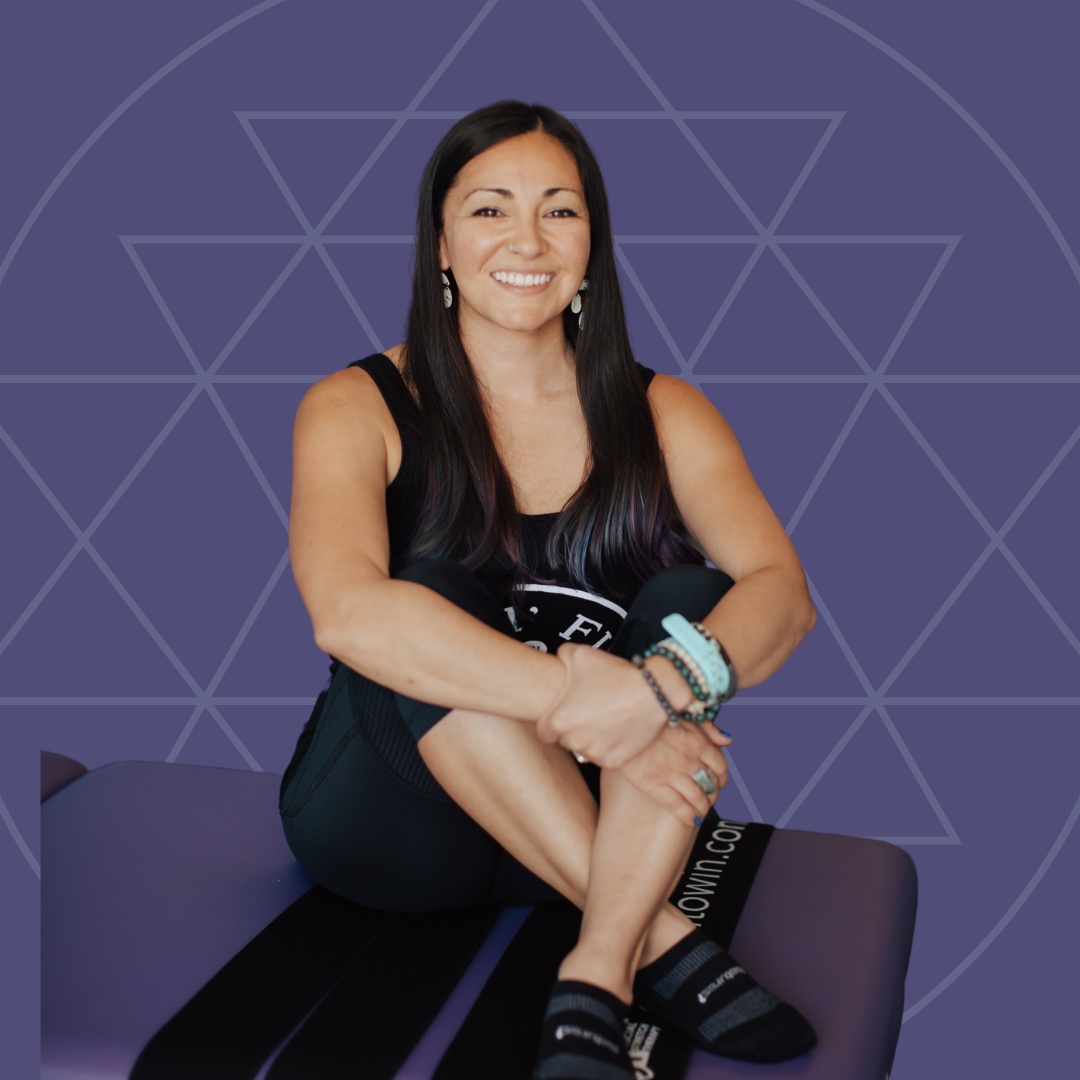
Rubecca – Owner, Pilates Instructor, FST Stretch Therapist
Engineer turned Pilates teacher, studio owner, stretch therapist and forever student of movement. I built Pilates Native to make Pilates more accessible to more people. I spend an incredible amount of time geeking out about the body, movement, sports and brains.
Sessions with me will feel delightfully weird, thoughtful, and peppered with fun science facts. While I probably won’t remember right from left or count properly to 8, I will genuinely care about your progress and recovery.

Laura – Pilates + Thai Yoga/Massage
Originally from Buffalo, Laura brings a strong direct teaching style to the studio. While she’s got an eye for those small details and excels at the foundations, she also brings the heat. Laura will mindfully take you past your comfort zone while keeping it safe and playful. She has a knack for spotting exactly what your body needs and taking you there.
Pilates sessions with Laura feel like a fiery mix of tough love and woo-woo magic. They’re straight forward, challenging and super fun. Laura’s Thai Yoga sessions are an incredibly relaxing blend of stretch, massage and energy work that can’t be matched.

Allison – Our newest instructor
Allison is warm, encouraging, and full of energy. She trained with Pilates Native/Pilates Plus and has started offering sessions at Pilates Native. She’s already developed a reputation for fun, safe sessions that help clients feel confident in their Pilates practice.
Sessions with Allison feel like moving with your best cheerleader at your side. These sessions are fun, encouraging, and confidence-boosting from start to finish.
Isabella – Virtual Assistant
Isabella first joined Pilates Native as a student client, then an intern and now supports the studio as our virtual assistant. She’s on the path to becoming a professional ballerina and between her ballet trainings and real job in California, Isabella handles all of our booking, creates graphics, and helps keeps things organized behind the scenes.
She is one of the few people who can read Rubecca’s handwriting, meaning she will probably have to stay on the team forever.

Roscoe – El Jefe
The real boss of the studio and our four-legged mascot.
Roscoe is great at greeting clients, warming up mats, providing balance challenges and occasionally supervises classes between naps.
🪷 What We Offer
Here’s a quick list of everything you’ll find at our studio:
Private Pilates sessions – one-on-one support, fully tailored to your goals.
Duets – train with a friend, partner, or family member. These two-person sessions give you the personal attention of privates with the fun and motivation of working alongside someone you know.
Small-group equipment classes – blends of reformer, tower, chair, and mat with no more than 3-4 folks per class.
FST Stretch Therapy + Thai Yoga Massage – assisted stretching that helps you release tension and move with more ease.
Special Pop-Ups & Community Classes – monthly themed sessions and events that keep things fresh and fun.
Special Populations Expertise – we work with athletes, hypermobile/hEDS clients, prenatal & postnatal parents, men, and student athletes. Sessions are available in-studio or over Zoom.
Comprehensive Pilates Instructor Training – A 450-hour comprehensive program for those who want to go deeper, whether your goal is to teach or just to understand Pilates on a whole new level. We’re proud to train the next generation of knowledgeable, detail-oriented instructors.
🌟 What Makes Us Different
There are plenty of places to do Pilates, enjoy Stretch Therapy, or enroll in Pilates Teacher Training. Here’s what sets us apart:
Engineer’s Eye for Detail – I’m not just a Pilates instructor; I’m also a Mechanical Engineer with 15 years of QA/QC experience. That background means I notice the small details: alignment, breath, muscle engagement. Those refinements are what transform a good session into a game-changing one.
Equipment for Every Body – Our reformers, towers, and chairs are adaptable for a wide range of bodies, heights, and abilities. We make sure the equipment works for you, not the other way around.
Small + Personal –Whether it’s group class or Instructor Training, we keep things intentionally small so you get real attention and support while also enjoying being a part of a small community.
Specialized Knowledge – From athletes to prenatal/postnatal clients, to hypermobility and hEDS, we have the training and experience to help you move safely and effectively.
Stretch + Strength – We don’t just build core strength. We balance strength with recovery through stretch therapy, Thai yoga massage, and mindful movement.
Trauma-Informed Studio – We honor that every body carries its own story. Our instructors are mindful, respectful, and committed to creating a safe, supportive environment for movement.
Clear + Upfront Pricing & Policies – No hidden fees, confusing memberships, or fine print. We’re transparent about what things cost and how we operate, so you always know what to expect.
Instructor Training That Sets the Bar – Our program is rigorous, detail-focused, and built on real-world application. Every teacher we mentor learns how to work with diverse bodies, injuries, and special populations. Our program utilizes real clients as demo students and tuition is all inclusive. Everything needed to certify is covered.
🌟 Why We Do It
Every instructor on our team came to Pilates because of injury or chronic pain. We know what it’s like to be in pain, to feel limited, and to be told what our bodies can and can’t do. Pilates gave each of us a way to rebuild and gave us a safe place to move when everything else felt impossible, scary or too hard. For each of us, Pilates has been the key that lets us keep lifting, running, hiking, dancing, doing yoga, and all of our other fun hobbies.
Whether you’re recovering, training, or just trying to feel less achy, we’ve been there, and we know how helpful Pilates and Stretch can be.
🍂 Come Hang Out
If you’ve been Pilates or Stretch curious or you’ve taken a break and want to get back to it, September’s a great time to jump in and try class, book a stretch, or just pop in and say hi. If you’re interested in Instructor Training, let’s chat! We have opportunities to start training in October or January.
Looking forward to seeing you in the studio soon!
-Rubecca
Pilates 101: The Infamous Origin Story
If you have no idea what Pilates is, or even how to describe it to others, you’re in good company. Most people have never heard of Pilates, have only heard of it in relation to super hot rich celebrities, or confuse it with yoga.
If you know a little about Pilates, you may be familiar with sleek studios, strange equipment and depending on your age, Pilates may draw up visuals of Jane Fonda workout videos or youtube Pilates.
What you might not know, is that Pilates was originally called Contrology and was invented by a chain smoking, cigar loving, former assistant brewer and boxer with a flair for tall tales.
What we know now as “Pilates” is named after the man who invented it, Joseph Pilates.
In many ways, Joe was larger than life and the stories about him and the history of Pilates are made for Hollywood. Common myth has Joe as a weak sickly child who suffered from asthma, rickets and a whole host of maladies. Tired of being a sick weakling, Joe took matters into his own hands and began to study anatomy, gymnastics, boxing, yoga, body building and martial arts. His father actually owned a boxing gym, making this pursuit a little easier on the young Joe.
Story tells that Joe transformed his body into such a strapping specimen that he was utilized as a model for anatomy books. Looking at photos of Joe throughout his life, it’s easy to believe. Well up into his 80’s, he was extremely fit and muscular, and often wearing what could only be described as a fitness version of “tighty whities”.
The story takes a gritty turn in the early 1900’s. Allegedly, Joe was living in England and teaching self defense for Scotland yard, while also working as a circus performer and a professional boxer. When England entered WWI, they rounded up all foreign nationals living in England at the time and thus, Joe, a German citizen, was interned at the Isle of Man. It was apparently during this time without much else to do, that he began to develop “Contrology”. The frequently repeated (and probably false) Pilates origin story claims that he utilized the springs from the hospital beds as resistance trainers and that’s how the Reformer and Cadillac were born.
After the war, Joe returned to Germany for a short time before abandoning a second family and heading off to New York City where he opened up his first Contrology Studio with his third wife (and possibly just life partner), Clara.
Due to the studio’s proximity to the New York City ballet and Joe’s reputation for helping injured dancers extend their career, Pilates became a mainstay in the dance community.
Joe spent the rest of his life chain smoking, teaching his method, inventing equipment, giving wild interviews and sending friends Christmas Cards with photos of himself wearing tighty whiteys.
When Joe died, Clara struggled to keep the business running and the entire method was at risk of being lost forever. Two of Joe’s former students stepped in to keep the Pilates Method going, leading into the branching of Pilates into the Classical and Contemporary methods, a long drawn out court battle over trademarks and who owned Pilates, before the eventual explosion of Pilates as we know it. (See, Hollywood is written all over this story.)
Now a days, Pilates still attracts dancers, athletes and celebrities, as well everyday people who want to move better, recover from injuries, and improve posture.
My Unexpected Introduction to Pilates
In my early 20s, I came home for a visit and went for a trail run. Mid-run, a lightning storm rolled in, and I was hauling ass down the trail when I slipped, fell and took a very painful tumble down three switchbacks. I chipped my teeth, scraped up my arms and legs, and jammed my femur into my hip socket. I was in severe pain and limping for weeks from that fall, which led to countless chiropractor appointments and an eventual referral to try Pilates.
At the time, I didn’t even know what Pilates was. I walked into a mat class at the gym thinking, “How hard can it be?”. I was running 40 mile weeks, lifting daily, doing yoga multiple times a week, and cycling up to 70 miles every Saturday.
Five minutes into class, I was panting, sweating and my legs were trembling uncontrollably. After struggling to do a single rollup, I looked around, and saw the room was full of sweet little old ladies absolutely crushing it. By the end of that class, I was toast. I actually waited until everyone else left before very ungracefully lumbering off of the mat and staggering out of the room.
I was hooked.
Why Pilates Works
Joseph Pilates was incredibly adept at anatomy and spent a lot of time studying different movement practices and observing animals. Pilates utilizes all of the planes of movement and at its core (pun intended!) it is about intentional, holistic, mindful movement. Every exercise emphasizes:
Core strength not just abs, but the deep stabilizing muscles
Alignment maintaining optimal posture and position during movement
Breath breathing patterns in Pilates support movement and release tension
Control & precision Pilates emphasizes controlled precise quality of movement over loads of wild ranges and qualities
This blend of strength, mobility, and mindfulness makes Pilates a powerhouse exercise method, whether you’re recovering from injury, cross-training for sports, or just hoping to move with more ease.
Ready to start your own Pilates story?
Luckily, you don’t have to fall off of a mountain to start your own Pilates journey. But if you did, we’ve got you covered.
In addition to our private one-on-one sessions, we have multiple small group classes and some special series kicking off.
I can’t wait to see you in the studio!
-Rubecca
Goal Accomplished! All 50 states!
Posted on July 18, 2025 by pilatesnative
Hi there, what’s up, what’s going on, how are you?
Things are settling in nicely in the new studio space. Laura and I have had some overlap with sessions, which has been fun and the 4-week trial with group classes went well. I’ve added two more classes to the schedule, the hubs did a great job hanging the barre and at some point I will get around to painting the back wall. Adding a main door has proven to be bit more involved than originally thought. Not only are the walls offset from each other by about 1.5”, the entryway is also wider at the top than the bottom by about 1.5”.
In super fun news, with our family vacation to St. Louis and Lake of the Ozarks last week, I completed my 50 state challenge!
This was a goal set when I was 15 years old and tagged along on a trip to Hawaii with my aunt. At the time, I had only been outside of Colorado to buy fireworks in Wyoming or visit my Grandma’s people at the pueblos in New Mexico. I had never seen the ocean, never been on a plane and had never gone on a vacation that wasn’t dispersed camping with the fam. My parents didn’t have send-a-kid-to-Hawaii money, so I got a work permit and spent a year working the 6am Sat/Sun drive-through-window shifts at Burger King, mowing lawns, picking up dog poo, babysitting and saving every penny. Despite spending my weekends with hair smelling like French fries and calling it an early night every weekend, being able to take a 10-day trip to Oahu was so worth it. I’m so grateful to my Aunt for changing my entire life with that experience.
While it would have been easy to bag all 50 states in a two week road trip, I wanted to really experience each place, so it took me 25 years.
My rules for a state counting were that I had to eat or do an activity in each state, not just drive through. This led to a lot of awesome meals, a lot of camping and a lot of exploring of hidden gems around the country.
My bff asked what’s next for travels and I think the next big adventures will be the Grand Canyon, visiting the Redwoods and taking trips to Belize and Costa Rica. Hopefully I can teach some Pilates in one of those locations!
What’s the Point of all of this Anyway?
About a month ago, I ordered some fun stickers from an online artist. Nothing fancy, just a couple of cute stickers that I wanted to share with a friend who shares similar hobbies.
Instead of a shipping notice and my stickers, I got two weeks of daily emails from the artist.
“Check out our new designs!”
“Popping in to your inbox with a daily tip!”
“Just checking in! You’re doing great!”
What I didn’t get?
The actual stickers. That I ordered.
Still haven’t gotten them.
It’s been weeks.
It made me think, what’s the point of all these emails? Why is this artist emailing me daily? But not sending my stickers?
If your business is selling stickers, just sell me the stinkin’ stickers. I don’t want daily check-ins or faux motivational posts. What I do want is the thing that I ordered. By dropping the ball on the sale and focusing so heavily on their email newsletters, that artist lost sight of what they do and why. I won’t be buying anymore stuff from their online store. Not because they didn’t interact with me daily, but because they dropped the ball when it really mattered and sent me a bunch of stupid emails that provided zero value.
I think about that a lot in my own work. It’s really easy in the fitness space to lose sight of what matters. To see all of the shiny fun stuff on social media and want to replicate those big exciting things. To follow the endless trends and get caught up in what’s next, but provide zero value.
In March, I finished up an Intro to Farming Class. The indigenous land practices class was taught by a Native American anthropologist and land steward, whose lecture has stayed with me: In the Diné culture, wealth isn’t measured by how much stuff you have or how big your house is or how much money you’ve accumulated. It’s measured by how much you give to your community. By the value you provide to others and to the Earth.
Ironically, I’d just heard a similar lesson in a copy writing class. The main theme was “What value are you providing your clients with your newsletters? Are you giving people something of actual use and value, or are you just trying to stay visible?”
Lately, it seems like there’s so much focus on just staying visible and not providing value, purpose or content of actual use.
There are so many fitness instructors online doing flashy things in beautiful places. A lot of times it looks amazing. And then I look closer and it’s really weird stuff that doesn’t even make sense. It may look great, but if the movement doesn’t support your body or your goals, then what’s it actually doing? If you don’t feel more stable, stronger, or pain-free afterwards, then what’s the point?
Every part of what I do at the studio filters through these lenses:
Is this relevant and useful for this client?
Does this provide value to their daily life?
How does this exercise benefit this person or this group?
What are we actually doing here?
And the big one: What’s the actual point of this anyway?
The real value of Pilates Native, is in how the work we do every week shows up in your life outside of the studio.
When your knees hurt less during your daily dog walks.
When you drive 1,000 miles and have zero back pain.
When you golf the entire weekend and have zero hip pain.
When your shoulders feel strong carrying groceries.
When you finally sleep better because your back isn’t seizing up.
That’s the point of all this.
That’s what I care about.
That’s the value I’m committed to providing.
You won’t get daily faux-tivational nonsense emails from me.
But you will get programs, sessions, and support that are actually built to serve you and your goals. (And this giant monthly newsletter with everything crammed into it.)
I can’t wait to see you in the studio.
-Rubecca
If you feel like we’ve dropped the ball or you didn’t get the value you were looking for, please let me know. I’d love the chance to make it right. Or if you’ve loved your sessions and want to let us know, a Google review would be super appreciated!
What do Pilates and Toothbrushing Have in Common?
I started my Pilates career as a Sports Therapist for Spine & Sports Therapy in Houston. Our five person team specialized in high endurance and high intensity athletes. Ironmen, marathon runners, ultrarunners and extreme athletes were our bread and butter. As a new instructor, I was constantly amazed by the intensity of the training programs our clients followed. They’d wake up at three in the morning for three hour runs, head home to get themselves and their kiddos ready for the day, work a full day, take care of parenting duties, make dinner, help with homework, put the kids to bed and then head out for 2-3 more hours of training. Their weekends were spent training around soccer schedules, dance performances and grocery shopping.
The craziest thing was how much time, money and effort these folks spent on managing their injuries.
They had biweekly standing appointments with the chiros and due to the nature of our program setup, they were forced to attend 1-2 appointments per week with me for Corrective Exercise and Stretch Therapy.
A large portion of my job included movement reeducation and a deep dive into the ergonomics of everything. From gait training, shoe selection and posture to sleep habits, desk setup, and driving habits, we covered the gauntlet of non-exercise habits that could be contributing to their issues. It was common for clients to lug bags full of shoes, pillows and other accessories to be tested, fitted and trained on.
We also spent a lot of time on the absolute very basic foundational things. Standing posture, breathing, core engagement and standing balance chief among them. It wasn’t uncommon to have clients with extreme debilitating back pain who could run competitive marathons, but were incapable of standing up straight or being able to balance on one foot for more than 5 seconds.
I can’t tell you the number of Ironmen I worked with who paid big bucks for specialized bootcamps but still couldn’t do a single *proper* pushup or sit-up.
They could do 1000 shitty form pushups and 1000 neck strainer sit-ups, but they would struggle, tremble, sweat and glare at me when they had to do one proper set. It wasn’t uncommon to see one of these amazing endurance athletes resembling an upside down turtle as they struggled to engage their core and lift their head, neck and shoulders up without kicking through their legs or bumping their bum into the floor to utilize momentum to get them back up.
Working 40-hour weeks with these clients taught me one key lesson. The importance of what I now call the “toothbrushing work”.
Think about it. Tooth brushing is the smallest most benign habit we have. Low skill, low attention required. Minimal time commitment of twice a day, two minutes a day. Add another minute or so for mouthwash and floss. We’re in and out in under 5 minutes a day for this ridiculously small habit.
Despite it’s minimal nature, we all know skipping tooth brush time it isn’t an option. Without this small, regular habit, bigger problems start to build. In addition to yucky mouth feel and bad breath, routinely skipping tooth brushing leads to tooth decay, gum disease, infections, and an increased risk of heart disease, stroke and even dementia! Brushing our teeth isn’t just about aesthetics. It’s about preventing systemic health issues that can affect the entire body.
Core strength, balance, proprioception, and mobility are the toothbrushing of our movement practice.
Those Ironmen weren’t getting injured just because of their insane training plans. They were getting injured because they weren’t doing the movement equivalent of brushing their teeth. They weren’t doing the foundational basics that kept their bodies resilient and functional.
When we neglect these foundational elements of movement, we might find we have poor posture, weak core muscles, bad balance, and lack of mobility. For some folks, those things can translate into chronic neck, shoulder, hip, and back pain, fall risk, increased injuries, sprains, strains, tears, fractures, joint stiffness and trouble moving with ease. Not to mention the constant fatigue and wear and tear that accompanies poor mechanics.
Just like skipping tooth brushing can lead to major problems, ignoring the daily foundational movement basics can severely impact your health and quality of life.
Here’s the good news.
Just like toothbrushing is a total low level activity with a big bang, your foundational basics don’t have to be hard or fancy. They don’t need to be intense or take forever. They just needs to be consistent. 4 minutes a day is 1,460 minutes a year, which adds up to about 24 hours and 20 mins. That’s a whole lot of investment for a little work each day.
If you’re looking for that quick extremely foundational and basic routine, here’s what we taught at the clinic and asked clients to do. You’ll recognize the daily routine as your Pilates homework. 15 years later, I’m still using this work, because it’s so effective.
Daily:
3-D Breathing x 1 minute
Single Leg Standing Balance 2 x 1 min each leg
Total time: 5 mins
3x/week:
Therapy Bridges (aka neutral bridges or Pilates bridges) 2 x 1 min
Side laying double leg lifts 2 x 1 min each side or Elbow/Knee side planks 2 x 1 min each side
Table Top 2 x 1 min or Elbow/Knee planks 2 x 1 min
Total time: 8 mins
Your subconscious can’t tell time, so if the 1 min time frame is too much starting out, break it down into smaller pieces and start to build your way up.
ie Start with six 10 second holds, work towards four 15 sec holds, progress to three 20 sec holds, to two 30 second holds, one 45 sec hold + one 15 sec hold, work up to one 60 sec hold.
In the same way we don’t just start brushing our teeth when we feel a cavity forming, we also don’t want to wait for aches, pains, or injuries to start moving.
Movement is medicine. And it’s essential preventative maintenance.
Think of Pilates as the toothbrush for your posture, your core, your balance, and your mobility.
Until next time,
-Rubecca
Saying No to Say Yes
Posted on March 22, 2025 by pilatesnative
When I left engineering a few years ago, an opportunity popped up to serve on the board for my son’s school. The school was in the process of expanding their preK-6th grade program to include a 7th and 8th grade middle school program. The expansion included purchasing and renovating an old church into the middle school building. After touring several other Montessori middle and high schools, I was stoked to help with this expansion. With just a few months left in my three year term, the middle school is thriving as it preps to enter its third school year in the fall.
As a board, we each volunteer anywhere from 3-5 hours a month for board meetings, strategic planning sessions and various committees. Many of the board members also volunteer in the classrooms, help out out on field trips, man the morning carline, reshelve books in the library, and help with a lot of other volunteer tasks. A few months ago, we were surprised by an anonymous letter from a community member criticizing the board for “not doing enough”. The letter didn’t include any specific details. No examples, no clear concerns, no events we’d skipped, just a vague call for more.
In all honesty, my first reaction was annoyance. How do you address concerns when you don’t even know what they are? How do you improve when there’s nothing concrete to work with? How do you address a complaint telling you to do more when you’re already doing a lot?
But after a long run a few days later, I had another reaction. This letter, instead of making me want to do more, made me pause and take stock of everything I was already doing.
The Reality of My Commitments
At the time, my life looked something like this:
Running two businesses: Pilates Native and The Essential Variable
Teaching Pilates Instructor Training
Co-hosting the Movers & Healers meetups
Taking on contract work as a Welding Engineer
Serving on the school board as the BOD secretary
Leading the 4-H bee group with my husband and maintaining the 4-H beehive
Attending a 15 week Intro to Farming class on Wednesdays after work
Taking ballroom dance lessons twice a week
Maintaining a 5-6 day workout routine that strength training, running, and Pilates
And, most importantly, balancing my role as a family member, whether that’s as a wife, daughter, aunt, sister, or mom
A Lesson from My 20s: The Burnout Trap
In my early 20s, I was stuck in a massive injury cycle. Run, injury, rest, recover, run, injury. Over and over again. No matter how much I rested, iced, or did recovery work, I ended up limping or in pain. Dr. DeWalch, the Dr. I worked for at Spine & Sports Therapy, sat me down and gave me a gentle but firm talk on overcommitting myself and the importance of using my energy wisely to avoid burnout. It wasn’t the amount of running that was trapping me on the injury cycle, it was my tendency to get so excited about life that it led to overcommitting myself and burning out. That burnout showed up as endless injuries.
After work one day, we sat down together and he had me write down my entire weekly schedule, day by day, hour by hour. In a list next to that schedule, he had me write down everything I was committed to and was doing on a weekly or monthly basis. Once everything was down on paper, he asked me what was most important. What did I want to do be doing? What could I let go of? What caused more stress than value? What was hurting my body? Not nourishing my soul?
It took us a couple of hours to get through this curate and cull process, looking for ways to cut out the distractions and make room for the things that really mattered. I left that meeting knowing that I would keep running, but could quit bootcamp. Would keep painting but quit voice lessons. Would keep Tuesday trivia nights with friends, but skip Thursday happy hours. That Pilates was a non-negotiable part of my life.
Since then, I’ve done these “curate and cull” sessions every couple of years. I have used his advice to direct hobbies, friendships, home decor, clothing choices and so much more.
That anonymous letter to the BOD was a reminder that it was probably time to listen to Dr. D again and curate and cull my commitments.
Every so often, sit down, take stock of your commitments. Curate your life like you would a piece of art. Keep the essentials. Let go of the noise. Leave space for what matters.
Some commitments have natural end limits. The Intro to Farming class just ended. My board term is up in May, and I won’t be seeking reelection. None of the kids signed up for Bee Group this year.
Instead, I’ll be spending that time:
Investing fully in Pilates Native and the Pilates instructor training program, rather than splitting my energy between too many projects
Using what I learned in farm class to turn our yard into an urban farmscape
Increasing my weekly running distances and keeping Strength Training and Pilates as important parts of my weekly routine
Scheduling a weekly art time and picking up brushes, paints, pencils, markers and messy things again
Writing more
Prioritizing weekly dates with family and friends, because those relationships deserve my full presence
The Power of Saying No
I used to believe that success was about adding more. More commitments, more projects, more friends, more accomplishments, more ways to contribute.
But Dr. D taught me that saying no wasn’t about doing less. It was about doing what mattered most and what brought the most value. Another mentor once said that we should aim for “deep, not wide”, which dovetails well with D’s advice.
That anonymous letter didn’t inspire me to work harder or add more volunteer activities to my schedule. It inspired me to sit down and take stock of my schedule. To choose my activities more intentionally, to create more space for what matters and to let go of things that have served their purpose.
At the end of the day, it’s not always about quantity, it’s also about quality. And every single relationship in my life, whether its family, friends or clients, deserves a Rubecca that shows up fully. With energy, clear priorities and the ability to hold space.
As spring break ends and I’ve spent a week fully embracing the trend of endless tv and social media scrolling known as “bed rotting”, I’m looking forward to putting the phone down, turning the tv off and heading back into the studio with a renewed energy, clearer priorities and a stronger sense of purpose.
I can’t wait to see you there.
-Rubecca
Practice Makes Permanence: the key to getting results
Posted on February 20, 2025 by pilatesnative
When I was working as a Welding Engineer, I had a teammate named Dave. Like many Welding Engineers (myself included), Dave was a bit of an odd duck. With thirty years in the field, he loved to talk welding. During one of his long monologues on welding shop cleaning practices, I interrupted him to ask about his email signature, which read:
“Practice Makes Permanence.”
Curious at the diversion from the usual “practice makes perfect”, I asked him what it meant.
Dave explained that most people believe “practice makes perfect”. The common assumption being that repetition leads to mastery. But after years spent welding, managing QA shops, and working in the automotive and oil & gas industries, he had learned otherwise. He had learned firsthand that practice doesn’t necessarily make perfect, it makes permanent.
What we repeat becomes our habit, whether it’s helpful or not. If his team practiced a flawed welding technique over and over again, that mistake became their default welding technique. But if they practiced the right techniques with consistency, those skills became second nature.
This lesson applies just as much in the gym, on the track, or in the Pilates studio as it does in a welding shop. How we practice our lifts, our runs, our rides, and our every day movements and activities becomes our default operation.
Why Pilates Results Vary
Every now and then, a client leaves the studio feeling like they didn’t get the results they wanted. That always stings because Laura and I put a lot of time and energy into creating individualized programs designed to help our clients reach their goals.
Typically, these clients fall into three categories:
They felt like they weren’t getting any results at all.
They felt like they were getting better results from another program.
They wanted immediate results.
Here’s the truth: these clients probably weren’t seeing the progress they expected at the pace they wanted. But it’s not because Pilates or Stretch Therapy don’t work or because Laura and I are bad at our jobs.
1) The “No Results” Clients
Clients who feel like they aren’t making progress typically aren’t attending sessions consistently. The movement patterns that led them to Pilates in the first place, whether that’s poor posture, muscle imbalances, or chronic tightness, don’t just disappear after a few sporadic sessions. If we never get the opportunity to challenge and rebuild those patterns, they stay the same.
No matter how effective a program is, we won’t get results without consistency and commitment.
2) The “Better Results Elsewhere” Clients
When a client tells me they’re getting better results from another program, it’s easy to assume that the other program or other trainer is simply better. But when I take a step back, it almost always comes down to one thing: consistency.
Most of these clients were following the other program exactly. Whether that was daily workouts, three times a week, or some other structured progression, they were following the other program closely. In contrast, their attendance at Pilates was often inconsistent.
Just like Dave’s welders, inconsistent practice leads to inconsistent results.
3) The “I Want Results Now” Clients
This group is trickier to address because they are showing up. They’re doing their homework and they’re putting in the work, but they’re on a firm deadline. They expect to see and feel drastically noticeable changes in just a few sessions and if they don’t get those immediate changes, they decide it’s not working.
We live in a world that normalizes unrealistic expectations and there are thousands of programs out there promising six-pack abs in 30 days or instant pain relief. My personal favorite are all of the Instagram and TikTok videos captioned “I learned this one simple exercise and now my chronic back pain is gone forever!”.
But Pilates, and any sustainable fitness practice, doesn’t work like that. Real result, whether that’s strength, flexibility, or pain relief, come from progressive adaptation over time.
Some clients start feeling better after just a few sessions. Others take weeks or even months to notice significant changes, especially if they’re addressing long-standing issues. Sometimes clients have limited body awareness and just don’t realize they’re progressing or feeling any different. That doesn’t mean nothing is happening, it just means the body is adapting at its own pace.
If you want faster results, the best thing you can do is increase consistency and manage expectations. Instead of asking “How fast can I see results?” let’s reframe to “Am I giving my body the time and practice it needs to create lasting change?”.
How Often Should You Do Pilates to Get Results?
Joseph Pilates famously recommended doing Pilates four times a week. But that advice was given nearly a century ago to two very different groups: elite dancers training at a high level and NYC office workers who weren’t exercising much at all.
Today, the general exercise recommendations are:
Strength training: 2-3 days per week
Aerobic activity: 150 minutes of moderate-intensity or 75 minutes of vigorous-intensity exercise per week
Where does Pilates fit in? That depends on your goals.
If Pilates is your only form of strength training, aim for 2-3 40-60 min sessions per week. (Check out our post on Is Pilates Strength Training?)
If Pilates is part of your aerobic activity, it should contribute to that 150-minute guideline.
If Pilates is cross-training for another sport, aim for 1-2 40-60 min sessions per week as active recovery.
If you’re using Pilates for injury rehab, frequency depends on where you are in your recovery. Some folks may need 4 sessions/week to ease back into a routine, while others may only need 1-2 sessions per week.
Pilates Native Recommendations: The bulk of our clients at Pilates Native are one-on-one clients and are either Injury Rehab clients or Cross-Training clients. We tend to recommend 1x/week minimum with us with additional sessions or Stretch Therapy/Thai Yoga sessions recommended by your instructor as needed. We do recommend 2x/week for clients who are just starting back to training after an injury/surgery/birth or for clients who are training at a super high level for an endurance event like an ultramarathon, ironman, etc.
The key to getting results isn’t necessarily hitting a magic number of sessions per week—it’s finding a schedule you can stick with long-term…and then doing it.
Practice Makes Permanence
Committing to weekly sessions, showing up, practicing with purpose, and making it a habit, creates the foundation for lasting change.
That said, I fully understand that Pilates may not be the best fit for everyone. Like any other form of movement, it requires commitment and patience. If another program better suits your goals, lifestyle, or schedule, that’s okay too. My priority is helping you find what works for you, even if that’s not with us.
But if you’re ready to commit—to practice with intention and turn progress into permanence—I’m here to support you every step of the way.
Let’s make it happen.
Cheers,
-Rubecca
p.s. To read more about the transition from Welding Eng to studio owner, check out this blog post.
p.p.s. To help some of my favorite clients really optimize their time at Pilates Native, we’ve created a special 10-pack offering for them. “The Works” is a 10-pack that includes 8 50-Min Pilates Sessions and 2 50-min Stretch Sessions (FST or Thai Yoga). If this sounds like something you’d be interested in, please reply to this email and let me know! We can upgrade your current 10-packs to “The Works” or include an add-on to monthly memberships to include a stretch session. The Works is offered at $889.20.
Clarity as Kindness – Updated Studio Policies and FAQ’s
Posted on January 30, 2025 by pilatesnative
Running always brings up some good brain activity and on the last few runs, I’ve been ruminating on “clarity as kindness”. This idea comes from Brene Brown’s Dare to Lead, which can be quickly summarized in the linked article. Today’s newsletter and most of my January admin tasks have leaned heavily into Clarity as Kindness. In addition to the usual insurance policy verifications, tax prep, and website fixes, I’ve spent a lot of time updating our studio policies to ensure they’re clear, consistent and maintain the integrity of the studio and what we offer.
Updated Studio Policies & FAQ’s
In the spirit of Clarity as Kindness, the studio policies and FAQ’s have been updated on our website. This page goes over session length, what to wear, our late policy, cancellations, reschedules, payment, cleaning, memberships, packages, holiday closures, inclement weather and more. If you don’t want to read through the entire page, the biggest updates are listed below:
What to Wear
Zippers, metal pulls, rivets, necklaces, earrings and other metal on clothing can damage the equipment. Please check clothing is clear of these items when coming in for a session.
Packages and Memberships
6-packs expire three months after the purchase date.
10-packs expire six months after the purchase date.
Monthly membership credits rollover, but must be used within 60 days of the cancelled session.
Clients are responsible for using their packages and membership credits prior to expiration date.
Packages and memberships can be paused for medical, personal or work needs. Please let us know asap so we can work with you to pause your sessions.
Cancellations and Reschedules
We do request that clients reschedule sessions rather than cancel. This allows us to spend more time in the studio with you and helps keep your sessions running smoothly.
Packages and Memberships
6-packs expire three months after the purchase date.
10-packs expire six months after the purchase date.
Monthly membership credits rollover, but must be used within 60 days of the cancelled session.
Clients are responsible for using their packages and membership credits prior to expiration date.
Packages and memberships can be paused for medical, personal or work needs. Please let us know asap so we can work with you to pause your sessions.
Cancellations and Reschedules
We do request that clients reschedule sessions rather than cancel. This allows us to spend more time in the studio with you and helps keep your sessions running smoothly.